Strait of Hormuz & birth of a new West Asian order
TEHRAN- Instability in Iran, sooner or later, transfers the costs of uncertainty to the entire region; just as Iran's stability and economic integration can reduce systemic risk in West Asia. This very issue has led many Arab governments of the Persian Gulf to gradually conclude that regional stability will be possible not through the elimination of Iran, but through establishing a stable and manageable relationship with Tehran.
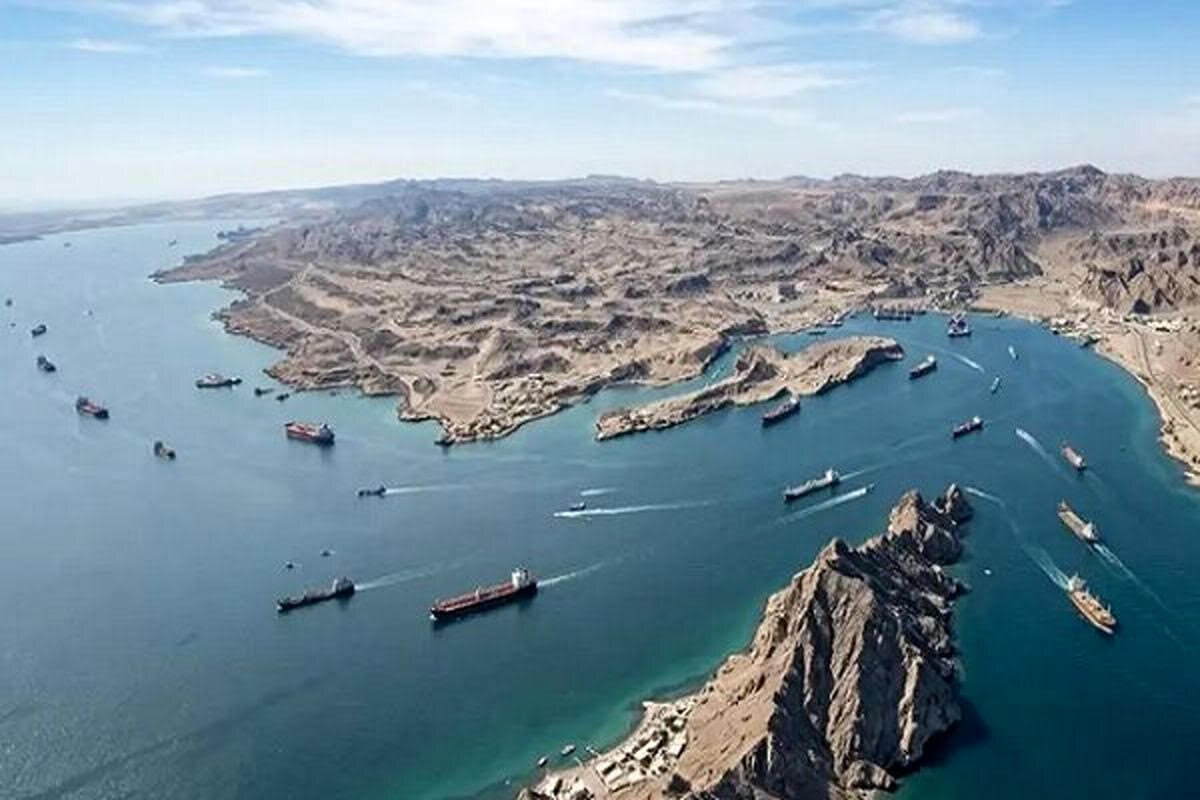
The recent crisis in West Asia cannot be regarded merely as a regional military conflict; what happened was, in effect, a geo-economic shock to the global economy—a crisis that once again showed that, despite technological and financial advances, the world remains dependent on a few limited geographical chokepoints, among which the Strait of Hormuz holds an irreplaceable position.
Disruption of the security of Persian Gulf maritime routes was not limited to rising energy prices. The marine insurance market, international transport, commodity trade, and even the security calculations of governments were simultaneously affected by a wave of uncertainty. Many scenarios that were previously discussed only in energy security literature have now become an objective reality in the global economy.
The importance of Hormuz lies not merely in the volume of energy passing through it, but in this fact: Hormuz is the geopolitical nexus connecting global trade and energy security. In an economy based on the continuous flow of energy, capital, goods, and data, any disruption at such chokepoints directly undermines the confidence of global markets.
Collapse of old assumptions about Persian Gulf security
But perhaps the most important consequence of the recent crisis is the collapse of some old security assumptions in the Persian Gulf. For decades, a major part of the security architecture of the southern Persian Gulf was based on the assumption that the US military presence and massive purchases of Western weapons could ensure lasting security for the region's economic infrastructure. However, recent developments have shown that in the age of drones, asymmetric warfare, and critical infrastructure vulnerability, even the most advanced defense systems cannot completely eliminate risk. Airports, ports, refineries, energy transmission lines, and financial and logistics hubs have all become part of the mutual deterrence equation. The message of the recent crisis was clear: in today's world, absolute economic security does not exist.
As a result, West Asia has entered a stage that can be called the "age of economic deterrence"—a period in which security is no longer defined solely by the number of fighter jets and arms deals, but will be measured by the ability to maintain trade flows, secure infrastructure, and manage risk. In this context, the recent crisis has also revealed an important fact: Iran's position in the energy security and regional trade equations is neither eliminable nor replaceable.
Geography, unlike many political equations, cannot be sanctioned or moved. Iran overlooks the world's most important energy transit route, and this position makes it one of the decisive variables in global economic risk assessment. Perhaps the most important consequence of the recent crisis is the return of "geography" to the center of global politics—where Iran, after centuries, once again reveals its historical and geopolitical weight in the maritime equations of the Persian Gulf and Hormuz.
Within this framework, the Strait of Hormuz is no longer just a maritime passage but is part of the deterrence architecture and balance of power in West Asia. Iran's influence on the rhythm of energy flows and global trade is no longer a temporary variable but has become a permanent component of regional equations. But perhaps the most important shift has occurred at the level of strategic perception among regional governments. In recent years, part of the economic order of the Persian Gulf was based on the assumption that the development path of Arab economies could be defined independently of Iran's situation. The recent crisis showed that such a separation is not sustainable.
Instability in Iran, sooner or later, transfers the costs of uncertainty to the entire region; just as Iran's stability and economic integration can reduce systemic risk in West Asia. This very issue has led many Arab governments of the Persian Gulf to gradually conclude that regional stability will be possible not through the elimination of Iran, but through establishing a stable and manageable relationship with Tehran.
Movement of Persian Gulf countries toward strategic autonomy
One of the most important geopolitical consequences of the recent crisis is the gradual movement of Persian Gulf countries toward a kind of "strategic autonomy." Regional governments will continue to maintain their security relations with the United States, but the experience of the recent crisis highlighted the fact that complete dependence of regional security on direct Washington intervention no longer has the same effectiveness as before. Consequently, many regional actors will try to create a pragmatic balancing act between relations with the US, China, Iran, and other powers—a model in which regional de-escalation is pursued not from an ideological stance but as an economic necessity.
The broad support of regional governments for the recent peace agreement should also be analyzed within this framework. This support reflects deep concern about a debilitating conflict that could undermine the foundations of economic development across the entire region. In the meantime, Iran's gradual return to the global economy will not be merely a political development; it could become one of the most important variables in redefining the region's economy.
Iran's economy, by virtue of its scale, transit position, and industrial and human capacities, has the potential to become one of the region's growth engines. This process, instead of eliminating existing centers, could lead to the formation of a wider network of commercial, industrial, and infrastructural cooperation. In the future West Asia, Bandar Abbas, Bushehr, Chabahar, and Qeshm will be as important in regional development equations as Dubai, Doha, Abu Dhabi, and Manama. A sustainable order takes shape when economic competition replaces geopolitical attrition and the cost of instability rises for all actors.
The new West Asia order is taking shape from within crises
Perhaps it can be said that the architecture of the new West Asian order is taking shape not in formal negotiation rooms but from within these very crises—an order in which the redefinition of regional relations is no longer a political choice but an economic and strategic necessity. Under such circumstances, any lasting agreement between Iran and the US will no longer be merely a bilateral matter but will require a level of regional cooperation and consensus. The experience of the recent crisis showed that the Arab governments of the Persian Gulf are more dependent than ever on stability in Tehran-Washington relations, and for this reason, they will likely play a more active role in mediation, de-escalation, and crisis management between the hostile parties.
At the same time, a secure, stable, and prosperous West Asia has gradually become part of the shared interests of the global economy—because Europe, China, and a large part of the world's independent countries can no longer ignore the costs of persistent disruption to the region's energy, trade, and logistics. Perhaps one of the most important post-crisis developments is the gradual end of an era in which economic siege and maximum pressure against Iran were imagined to have no serious cost for the global economy. Many international actors have now concluded that lasting stability in West Asia will not be achievable without some form of managed integration and engagement with Iran.
The article is written by Alireza Abbasi, an Economic Analyst, and published by IRNA
Leave a Comment